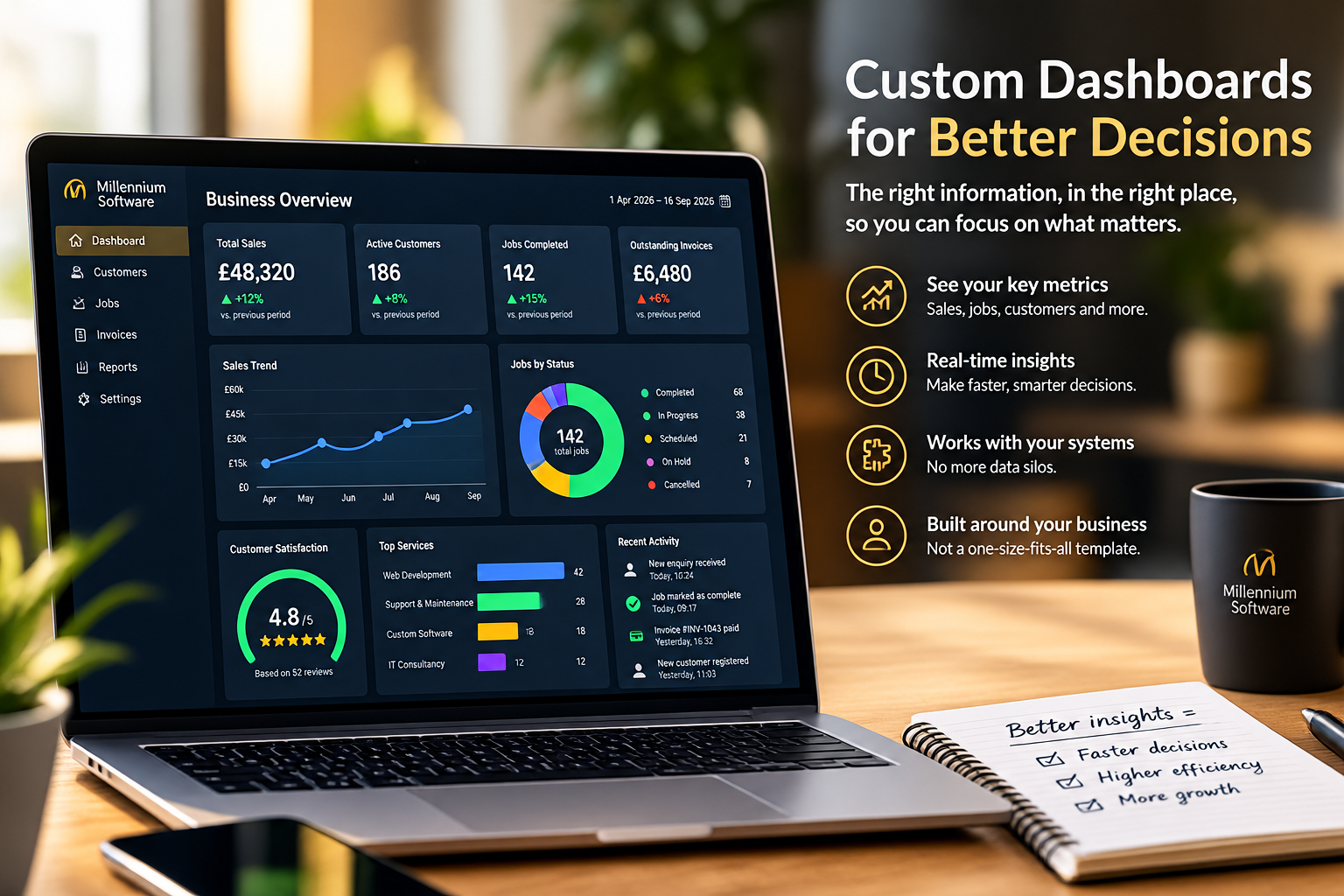
In the fast-paced world of business, having the right information at your fingertips is crucial. Business owners often find themselves sifting through spreadsheets, emails, and disconnected applications to answer fundamental questions about their operations. This article will explore how custom dashboards and reporting systems can provide the clarity and insights needed to make informed decisions, especially for those grappling with too many data sources.
The Importance of Tailored Dashboards
Many businesses rely on generic dashboards that may not address their specific needs. A tailored dashboard can present key metrics and performance indicators in a way that makes sense for your unique operations. Instead of spending hours piecing together information from various sources, a bespoke solution consolidates this data into a single, user-friendly interface.
This direct access to relevant data allows business owners to identify trends, monitor performance, and make proactive decisions. For instance, if you run a service-based company, your dashboard could show real-time job statuses alongside customer feedback, enabling you to respond quickly to both operational challenges and client needs.
What to Include in Your Custom Dashboard
When creating a custom dashboard, it’s essential to focus on the metrics that matter most to your business. Some examples of key performance indicators (KPIs) that might be included are:
- Sales figures over various periods
- Customer satisfaction ratings
- Job completion rates
- Operational costs
These KPIs should be displayed in a way that allows for easy interpretation. Graphs, charts, and gauges can be very effective in visualising this information, making it easier to identify areas for improvement or opportunity.
Real-Time Reporting for Enhanced Decision-Making
One of the significant advantages of custom dashboards is the ability to provide real-time reporting. This means you can access the most up-to-date information whenever you need it, rather than waiting for periodic reports. This immediacy can be invaluable when quick decisions are required.
For example, if your sales are lagging, a real-time dashboard can help you pinpoint the exact moment this trend began, allowing you to react swiftly. By observing which products or services are underperforming, you can deploy targeted marketing strategies or adjust your offerings accordingly.
Integration with Existing Systems
Another critical consideration when developing a custom dashboard is how it will integrate with your existing systems. Whether you’re using a CRM, inventory management software, or financial tools, your dashboard should pull in data from these platforms seamlessly. This ensures that you’re working with a comprehensive view of your business rather than fragmented data.
At Millennium Software, we work closely with clients to understand their existing infrastructure and develop solutions that fit within it. This approach not only enhances functionality but also reduces the likelihood of data silos, which can complicate decision-making.
Feedback During Development
A unique aspect of our process is that clients can review a live or staging version of their dashboard as it is being built. This allows for ongoing feedback, ensuring that the final product truly meets your needs. Instead of waiting until the end of a project to see the results, you can influence the development process actively.
By engaging with the development team early, you can highlight any adjustments needed, ensuring that the final dashboard is tailored to your operational requirements. This collaborative approach not only enhances the end product but also builds a more robust working relationship.
Frequently Asked Questions
How can dashboards improve my business operations?
Dashboards provide real-time insights into your business performance, allowing for quicker decision-making and more strategic planning. By focusing on the metrics that matter most, you can enhance efficiency and productivity.
What types of data can be included in a custom dashboard?
Custom dashboards can include a variety of data types, such as sales figures, customer feedback, job completion rates, and operational costs. The key is to focus on the KPIs that are most relevant to your business.
How does the process of creating a custom dashboard work?
The process begins with understanding your specific needs and existing systems. You'll have access to a staging version of the dashboard during development, allowing you to provide feedback and ensure it meets your requirements.
Can I integrate existing software with a new dashboard?
Yes, a custom dashboard can integrate with your existing software systems, ensuring a seamless flow of data and providing a comprehensive view of your operations.
If you’re ready to discuss how tailored dashboards can help answer your operational questions, tell me what you are trying to solve. At Millennium Software, we focus on delivering solutions that make a real difference.