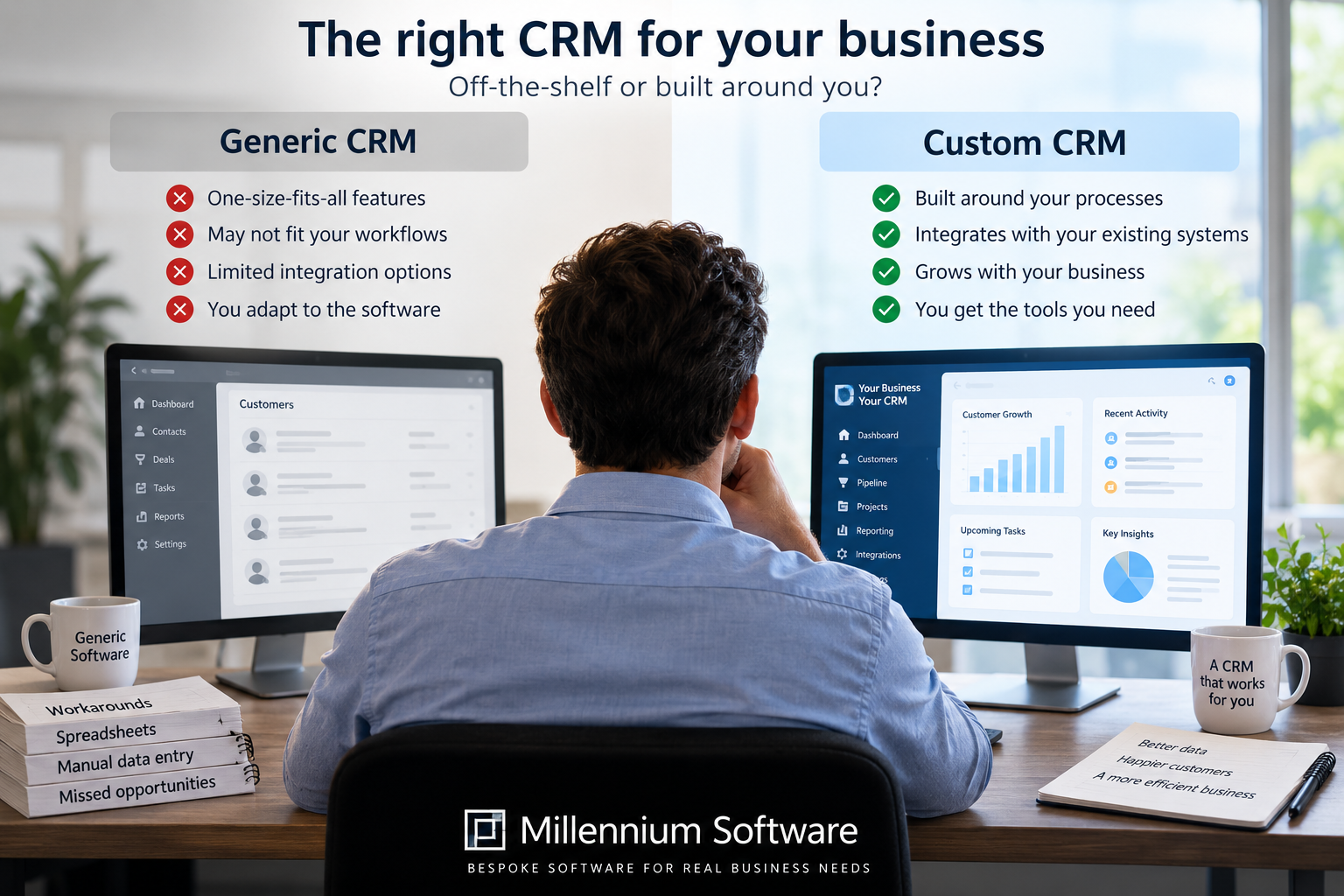
In today's fast-paced business world, managing customer relationships effectively is crucial. Many business owners face the dilemma of choosing between a generic CRM system and a bespoke solution tailored to their unique needs. This article will help you understand when a custom CRM is not just a luxury, but a necessity for your business.
Understanding the Limitations of Generic CRMs
Generic CRM systems are designed to serve a broad audience, which means they often come with features that might not align perfectly with your operational requirements. For instance, if your business relies on specific workflows or has unique reporting needs, a generic CRM may force you to adapt your processes to fit the software instead of the other way around. This can lead to inefficiencies, duplicated efforts, and ultimately, frustration among your team members.
Consider a scenario where a sales team uses a generic CRM that lacks integration with their existing tools. This could result in manual data entry, leading to errors and wasted time. When the system doesn't support your particular workflows, it can disrupt your entire operation, making it clear that a one-size-fits-all solution may not be suitable.
Identifying Your Business Needs
The first step in determining whether you need a custom CRM is to conduct a thorough assessment of your business requirements. What operational problems are you currently facing? Are you dealing with excessive spreadsheets, multiple data entry points, or disconnected systems? Identifying these pain points will help clarify whether a bespoke CRM is the right solution for you.
For example, if your customer interaction relies heavily on specific data not captured by generic CRMs, such as unique customer preferences or industry-specific metrics, a custom solution can be designed to capture and report on this data effectively. This ensures that you have the insights needed to make informed business decisions and improve customer satisfaction.
The Benefits of a Bespoke CRM
One of the key advantages of a custom CRM is that it can be tailored to fit your exact business processes. This means that the software can evolve along with your business, adapting to new challenges and opportunities as they arise. By working directly with a developer like Steve Bodman at Millennium Software, you eliminate layers of overhead, allowing for a more efficient development process.
Moreover, bespoke CRMs can integrate seamlessly with other systems your business uses, creating a unified platform that minimizes manual data entry and reduces the risk of errors. This level of integration can lead to significant time savings and a more cohesive view of your customer interactions.
How Custom Development Works
At Millennium Software, we believe in a collaborative approach to software development. Throughout the process, you will have access to a live/staging version of your system, allowing you to review progress and provide feedback in real time. This iterative feedback loop ensures that the final product aligns with your expectations and operational needs.
By engaging directly with Steve, you can discuss your specific challenges and vision for the software. This direct communication streamlines the development process and eliminates potential misunderstandings that often occur when multiple layers of management are involved.
Real-World Applications of Bespoke CRMs
The benefits of a custom CRM extend beyond just efficiency; they can also enhance customer engagement. For instance, a bespoke CRM can include features such as automated follow-ups, tailored reporting, and specific customer segmentation that generic systems often lack. This allows your team to focus on building relationships rather than getting bogged down in administrative tasks.
Consider a business in the service industry that requires a unique booking system integrated into their CRM. A generic CRM may not support this functionality, leading to a disjointed customer experience. A custom solution can be designed to incorporate booking directly into the CRM, improving workflow and enhancing customer satisfaction.
Frequently asked questions
What are the main advantages of a custom CRM over a generic one?
A custom CRM offers tailored features to fit specific business processes, better integration with existing systems, and a more efficient user experience. It can evolve with your business, addressing changing needs over time.
How can I assess if my business needs a bespoke CRM?
Assess your current operational challenges, such as duplicated efforts or workflow inefficiencies. If a generic CRM doesn't meet your needs or forces you to adapt your processes, a bespoke solution may be necessary.
What is the development process like for a custom CRM?
The development process at Millennium Software involves direct collaboration with Steve, providing you access to a live/staging version for feedback. This ensures that the final product aligns with your expectations.
Can a bespoke CRM integrate with my existing systems?
Yes, one of the main benefits of a bespoke CRM is its ability to integrate seamlessly with other tools and systems your business already uses, creating a unified operational platform.
If you find yourself struggling with a generic CRM and are considering whether a bespoke solution might be the answer, tell me what you are trying to solve. At Millennium Software, we specialize in bespoke software development that addresses specific business challenges and enhances operational efficiency.